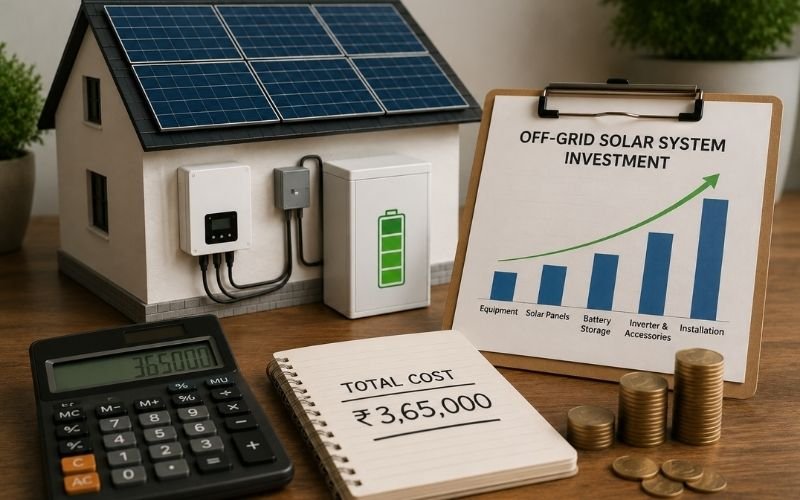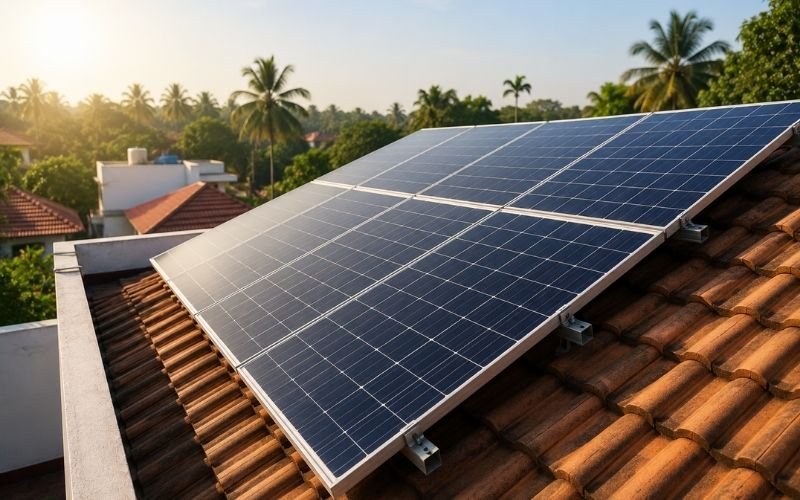
Solar Panels
Solar modules convert sunlight into DC electricity that powers loads and charges the battery.

Hybrid Solar Solutions
A hybrid solar system combines solar panels, battery storage and the utility grid to help you reduce grid dependence while keeping essential loads powered during outages.
What Is Hybrid Solar?
A hybrid solar system connects solar panels to both a battery bank and the utility grid through a hybrid inverter. Solar power can run your loads during the day, charge the battery with surplus generation and, where permitted, send remaining surplus to the grid.
When solar generation is low or the grid goes down, stored battery energy can be used to keep selected essential loads running. This gives a hybrid system a combination of bill reduction, energy storage and backup capability.
Get practical guidance on solar capacity, battery size, backup requirements and the right hybrid configuration.
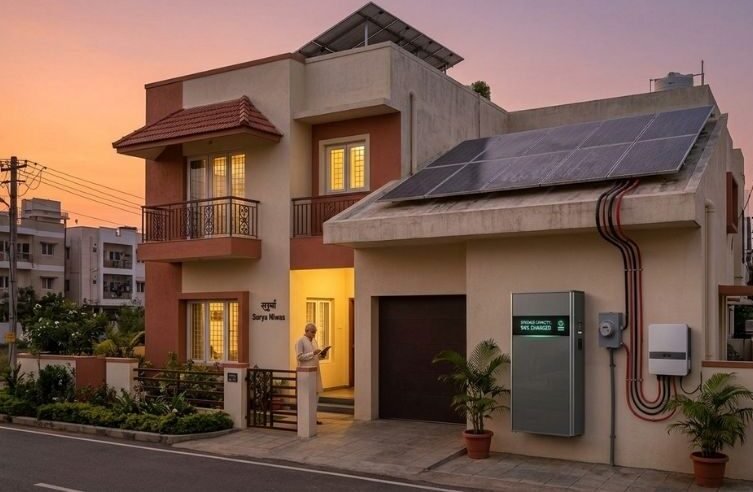
Smart Energy Management
During daylight hours, the solar array produces electricity for your property. Surplus generation can charge the battery. Once the battery is charged, any additional export depends on the local DISCOM rules and approved metering arrangement.
At night or during a power cut, the battery can supply configured backup loads. If the battery is depleted, the system can use the grid when the grid is available.
System Components
A hybrid PV system combines generation, storage, conversion, electrical protection and grid interaction into one coordinated energy system.
Solar modules convert sunlight into DC electricity that powers loads and charges the battery.
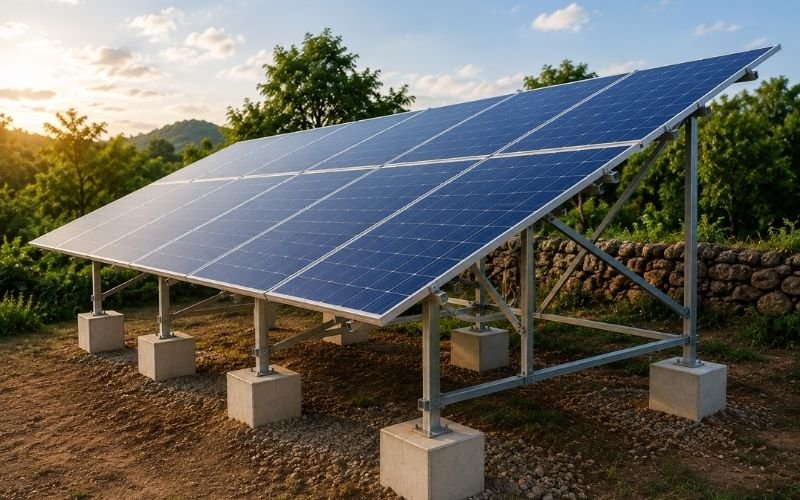
Roof or ground mounting structures position and secure the solar panels at a suitable orientation and tilt.
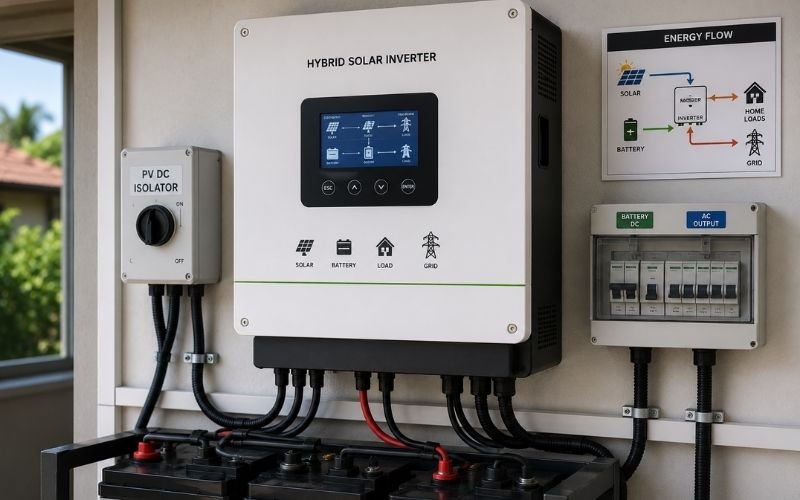
The hybrid inverter converts DC to AC, manages energy flow and can coordinate solar, battery and grid power.
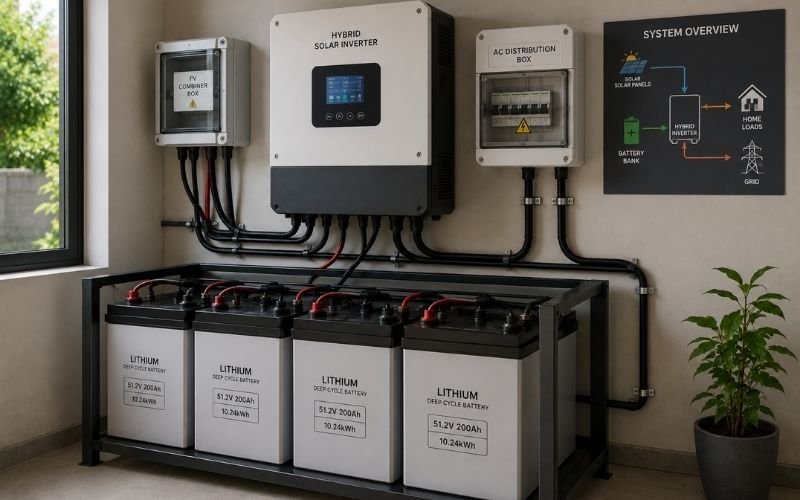
Stores surplus solar electricity for night-time use and backup during grid outages.
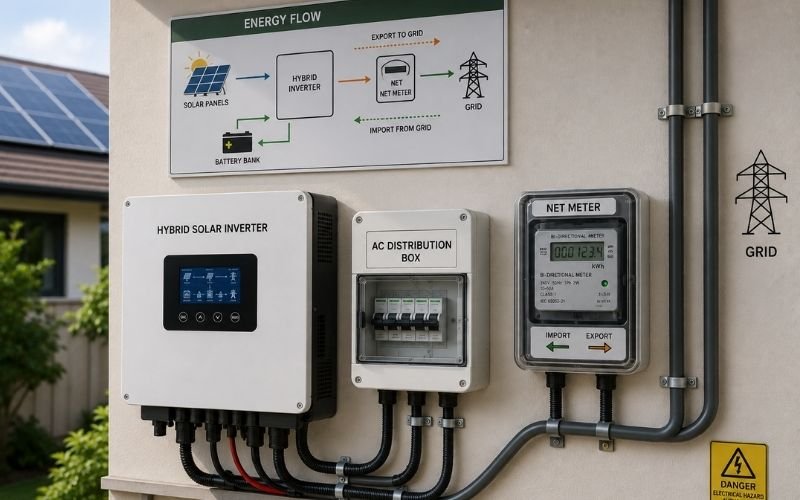
Grid-connected hybrid systems may use bidirectional metering where export is permitted. Zero-export operation may be used where required.
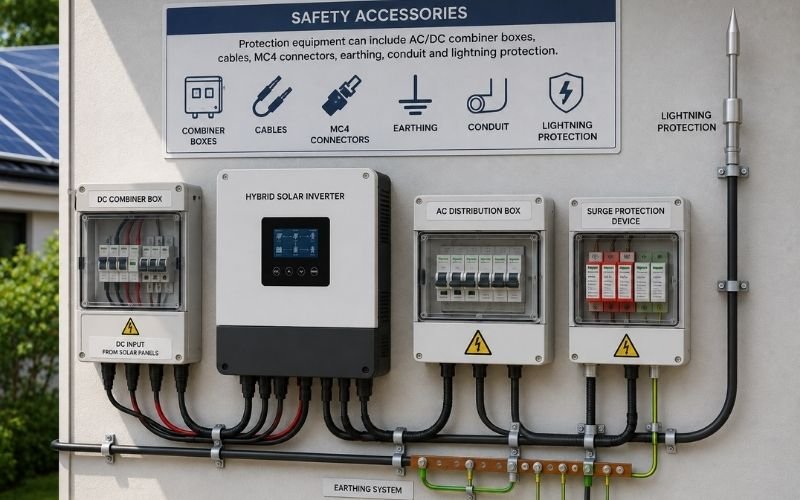
Protection equipment can include AC/DC combiner boxes, cables, MC4 connectors, earthing, conduit and lightning protection.
Energy Flow
Hybrid systems are designed to move energy between solar generation, the battery, connected loads and the grid according to system settings and local grid rules.
Solar electricity is used first for the connected loads. When generation exceeds current demand, surplus energy can charge the battery.
When solar is unavailable, the battery can supply the configured backup loads. If the battery becomes depleted, grid power can resume when the grid is available.
How It Works
A hybrid system continuously manages solar generation, household demand, battery state and grid availability.
PV cells convert sunlight into DC electricity during daylight hours.
The hybrid inverter converts and coordinates electricity between the solar array, battery and loads.
Extra solar energy can be stored in the battery instead of being wasted or immediately exported.
During the day, solar generation can directly support appliances and other connected loads.
Stored energy can supply selected loads when solar production is insufficient.
The utility grid can supplement the system when solar and available battery energy are insufficient.
Where the local DISCOM permits export, remaining surplus can be sent through an approved net-metering arrangement.
When designed for backup, the inverter isolates suitable loads from the grid and supplies them from the battery.
Why Hybrid Solar?
Hybrid solar can be useful when you want solar savings and battery backup while retaining a connection to the utility grid.
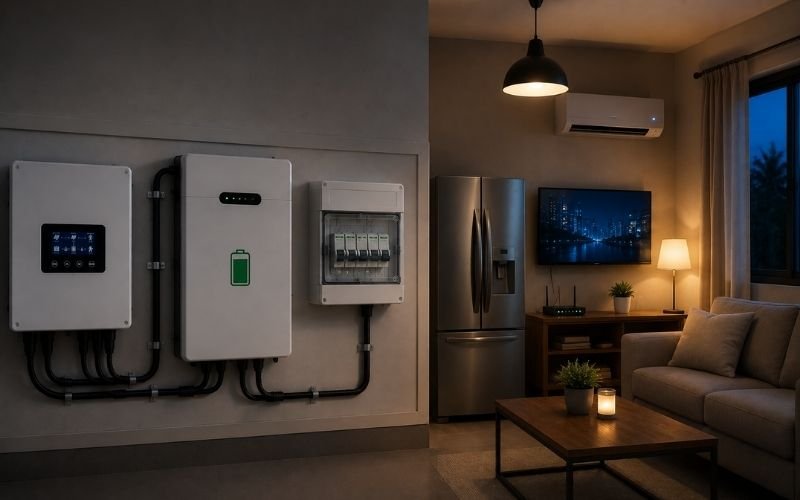
Battery storage can keep configured essential appliances operating during suitable power cuts.
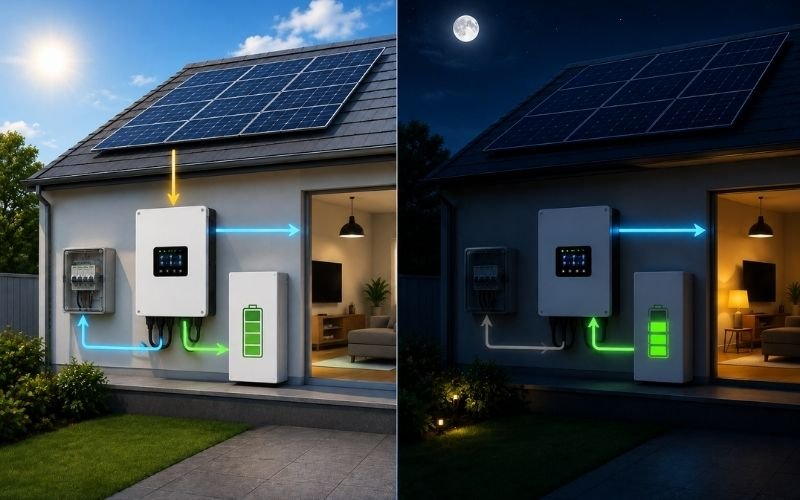
Store excess daytime solar and use that energy later when solar generation is unavailable.
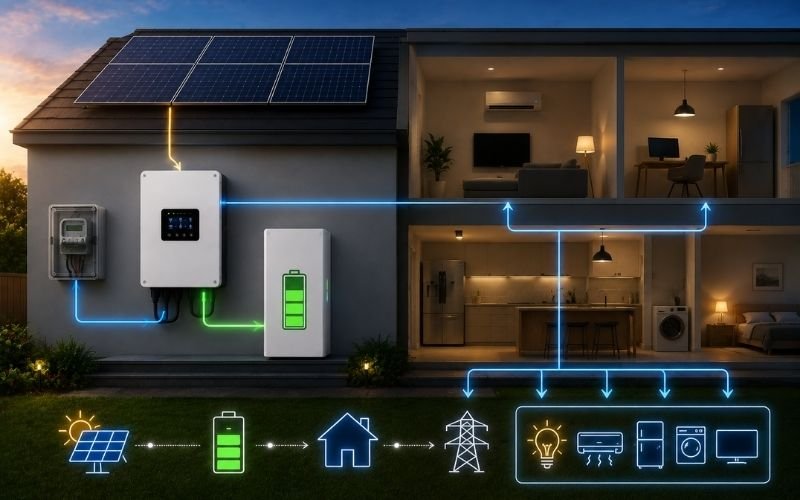
Solar, battery and grid power can be managed according to your configured energy priorities.
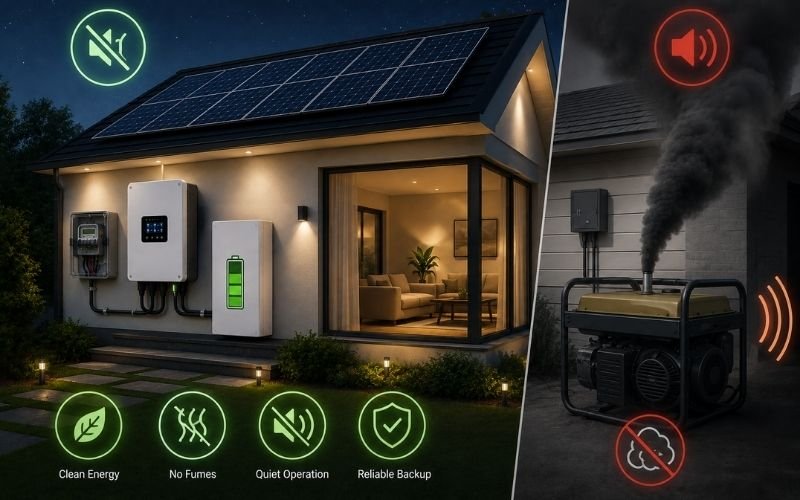
Solar and batteries can provide backup without the fumes and operating noise of a conventional diesel generator.
Cost Guide
Hybrid system pricing depends heavily on solar capacity, battery capacity, inverter specifications, panel and battery brands, backup requirements, installation complexity and local conditions.
*Indicative figures from the referenced 2026 SolarSquare material. Actual pricing can vary significantly with panel type, inverter type and brand, battery capacity and chemistry, backup duration, installation requirements and location.
Government Subsidy
Hybrid solar subsidy eligibility should not be assumed automatically. The referenced 2026 material states that eligible grid-connected hybrid rooftop systems may qualify under the PM Surya Ghar Muft Bijli Yojana when approved equipment and applicable requirements are followed.
Final eligibility can depend on the National Portal, DISCOM approval, metering arrangement and state-specific implementation. Battery/behind-the-meter configurations and export restrictions can affect how a hybrid system is treated.
Compare Solar Systems
The main difference between the three systems is how they interact with the utility grid and whether they use battery storage.
| Feature | On-Grid | Off-Grid | Hybrid |
|---|---|---|---|
| Connected to utility grid? | Yes | No | Yes |
| Battery storage? | Normally no | Yes | Yes |
| Backup during grid outage? | Normally no | Yes | Yes, for configured loads |
| Can export surplus? | Yes, subject to local rules | No utility-grid export | Where permitted by DISCOM/metering rules |
| Best suited for | Properties with reliable grid power that primarily want to reduce electricity bills. | Locations where grid power is unavailable or highly unreliable. | Properties that want solar savings plus battery backup while retaining grid connectivity. |
| Upfront cost | Lowest of the three in typical installations | Higher because of battery storage | Higher because of battery + hybrid hardware |
Things to Consider
Battery-backed flexibility comes with additional cost and maintenance considerations compared with a conventional on-grid system.
A hybrid system requires a battery and hybrid inverter, increasing the initial investment compared with a standard on-grid installation.
Battery life depends on chemistry, usage and operating conditions. Replacement is an additional long-term cost.
The additional battery and hardware cost can make the financial payback longer than a comparable on-grid system.
Hybrid Solar Insights
Explore practical guides on hybrid solar systems, battery storage, energy management, backup power and smarter solar decisions.
Frequently Asked Questions
A hybrid solar system connects solar panels to both a battery bank and the utility grid through a hybrid inverter. Solar can power loads, charge the battery and, where permitted, export surplus electricity.
A hybrid system is connected to both the utility grid and batteries. An off-grid system operates independently of the utility grid and relies on its own battery storage.
Yes, when the system is designed with backup capability. The hybrid inverter can isolate suitable backup loads from the grid and supply them from the battery.
Indicative 2026 figures in the referenced material range from approximately ₹3 lakh for 2 kW to approximately ₹15 lakh for 10 kW. Final pricing depends on battery capacity, inverter, panels, backup requirements and installation conditions.
Some eligible grid-connected hybrid rooftop configurations may qualify under applicable government schemes, but eligibility is not automatic. Approved equipment, DISCOM requirements and metering arrangements must be checked for the specific installation.
It may be possible to add battery storage using an AC-coupled storage inverter or replace the existing inverter with a compatible hybrid model. The existing equipment, electrical design and local DISCOM requirements should be checked first.
Battery lifespan depends on chemistry, usage, temperature, depth of discharge and operating conditions. Battery replacement should be included in the long-term ownership plan.
For properties with reliable grid power that mainly want lower electricity bills, on-grid solar is generally simpler and less expensive. Hybrid solar makes more sense when battery backup and reduced grid dependence are important.
Ready for Smarter Energy?
Talk to Nexren about solar capacity, battery backup, essential loads, inverter selection and the right grid-connected hybrid configuration.