Choosing the right solar system depends on your electricity usage, grid connectivity, backup requirements, available space, and budget. While all solar systems use sunlight to generate electricity, on-grid, off-grid, and hybrid solar systems work in different ways.
An on-grid system is connected to the electricity grid and is primarily designed to reduce electricity bills. An off-grid system operates independently of the grid and relies on solar panels and battery storage to supply electricity. A hybrid solar system combines solar generation, battery storage, and grid connectivity to provide greater flexibility and backup capability.
Understanding these differences can help you choose a solar solution that matches your property's energy requirements.
What Are the Main Types of Solar Systems?
Residential and commercial solar installations generally fall into three categories:
- On-grid solar systems
- Off-grid solar systems
- Hybrid solar systems
The main difference is how each system interacts with the electricity grid and whether battery storage is included.
| Feature | On-Grid Solar | Off-Grid Solar | Hybrid Solar |
|---|---|---|---|
| Grid connection | Yes | No | Yes |
| Solar panels | Yes | Yes | Yes |
| Battery storage | Usually not required | Required | Usually included |
| Backup during power cuts | Generally unavailable without additional backup equipment | Yes | Yes |
| Electricity export to grid | Possible where applicable | No | Possible where applicable |
| Dependence on grid | Higher | None | Lower |
| Typical use | Bill reduction | Independent power supply | Bill savings + backup |
What Is an On-Grid Solar System?
An on-grid solar system, also known as a grid-connected solar system, is connected to the local electricity grid.
Solar panels generate electricity during the day. The electricity is used by appliances and other loads within the property. Depending on the system and applicable electricity regulations, surplus generation may be exported to the grid.
When solar generation is insufficient, electricity can be drawn from the grid.
How Does an On-Grid Solar System Work?
A typical on-grid solar installation includes:
- Solar panels
- A grid-connected solar inverter
- Mounting structures
- Electrical protection equipment
- Grid connection
During daylight hours, the solar panels generate electricity. The inverter converts the electricity into a form that can be used by household appliances.
If the property consumes less electricity than the solar system generates, surplus electricity may be sent to the grid under the applicable electricity metering arrangement.
At night, when the solar panels are not generating electricity, the property can use electricity from the grid.
Advantages of On-Grid Solar
An on-grid solar system can be suitable for properties that already have a reliable electricity connection and primarily want to reduce electricity costs.
Potential advantages include:
- Lower electricity bills
- No large battery bank required in a typical configuration
- Efficient use of available rooftop space
- Straightforward system architecture
- Ability to use grid electricity when solar generation is insufficient
- Potential to export surplus electricity, subject to applicable regulations and utility arrangements
What Happens During a Power Cut?
A standard grid-connected solar system generally does not continue supplying the property during a grid outage.
This is an important point that homeowners sometimes overlook.
The inverter normally disconnects the solar system from the grid during an outage for electrical safety. Therefore, having rooftop solar does not automatically mean that your home will have backup power during a power cut.
If backup power is important, a battery-based or appropriately designed backup system may be more suitable.
What Is an Off-Grid Solar System?
An off-grid solar system is designed to operate without relying on the electricity grid.
It is generally used where a reliable grid connection is unavailable, impractical, or where a property requires an independent electricity supply.
An off-grid system normally combines:
- Solar panels
- Batteries
- An inverter
- Charge-control and protection equipment
- Appropriate system monitoring
The batteries store electricity generated by the solar panels so that it can be used when solar generation is unavailable or insufficient.
How Does an Off-Grid Solar System Work?
During the day, solar panels generate electricity.
Some of the electricity can be used immediately by appliances, while excess generation can be directed toward charging the batteries.
After sunset or during periods of low solar generation, stored energy in the batteries can supply the property's electrical loads.
Because there is no grid connection to fall back on, the system needs to be properly sized according to:
- Daily electricity consumption
- Peak electrical loads
- Battery capacity
- Solar generation
- Number of backup hours required
- Seasonal changes in solar availability
Advantages of Off-Grid Solar
An off-grid system can provide:
- Independence from the electricity grid
- Electricity supply for remote properties
- Battery backup
- Greater control over stored solar energy
- Reduced dependence on utility infrastructure
Things to Consider Before Choosing Off-Grid Solar
Off-grid systems require more careful planning because the property cannot simply rely on the grid when solar generation is low.
Battery capacity becomes particularly important.
The system may need to account for periods of:
- Cloudy weather
- Reduced solar generation
- Higher electricity consumption
- Extended backup requirements
This can make an off-grid system more complex than a typical grid-connected installation.
What Is a Hybrid Solar System?
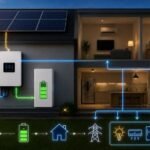
A hybrid solar system combines solar panels, battery storage, and grid connectivity.
This configuration can provide a balance between solar energy generation, battery backup, and access to the electricity grid.
During the day, solar energy can power the property and charge the battery. Depending on the system configuration, excess solar energy may also be exported to the grid.
When solar generation is insufficient, the battery or grid can supply electricity.
During a grid outage, the system can provide backup power to selected loads when designed and configured for backup operation.
How Does a Hybrid Solar System Work?
A typical hybrid system can operate in several ways.
During sunny periods:
Solar energy can supply household loads while excess energy charges the battery.
When solar generation decreases:
The battery can provide electricity to selected loads.
During a grid outage:
The backup function can supply electricity to supported circuits, depending on the inverter, battery capacity, system design, and installation configuration.
When battery energy is low:
The grid can provide electricity where grid connectivity is available.
This flexibility is one of the main reasons homeowners consider hybrid solar systems.
On-Grid vs Off-Grid vs Hybrid Solar: Key Differences
1. Grid Connectivity
The biggest difference is the relationship with the electricity grid.
On-grid: Connected to the grid and generally depends on it when solar generation is unavailable.
Off-grid: Designed to operate independently of the grid.
Hybrid: Connected to the grid while also using battery storage for greater flexibility and backup capability.
2. Battery Requirement
A typical on-grid system does not require batteries.
Off-grid systems generally require batteries because there is no grid connection available as a backup source.
Hybrid systems commonly include batteries to provide energy storage and backup functionality.
3. Backup During Power Cuts
A standard on-grid system should not be assumed to provide backup power during a grid outage.
Off-grid systems are designed to operate independently and therefore include energy storage as part of the system design.
Hybrid systems can provide backup power to supported loads when the inverter and battery system are configured for backup operation.
4. Initial Investment
The cost of a solar installation depends on system size, equipment, installation requirements, electrical work, battery capacity, and other factors.
A typical on-grid system can have a lower initial equipment requirement because it does not normally require a battery bank.
Off-grid and hybrid systems can require additional investment because of battery storage and associated equipment.
However, the appropriate system should be selected based on the property's requirements rather than simply choosing the lowest initial cost.
5. Energy Independence
An on-grid system reduces dependence on purchased electricity but remains connected to the utility grid.
An off-grid system is designed for energy independence but requires sufficient solar generation and battery storage.
A hybrid system can reduce grid dependence while retaining the grid as an additional energy source.
Which Solar System Is Right for Your Home?
There is no single solar configuration that is suitable for every property.
The right choice depends on your electricity consumption, grid reliability, backup requirements, and budget.
An On-Grid System May Suit You If:
- Your property has a reliable electricity connection
- Your primary goal is reducing electricity bills
- You do not require battery backup
- You have suitable rooftop space
- You want to use solar generation while retaining access to the grid
An Off-Grid System May Suit You If:
- Your property has limited or no grid access
- You need an independent electricity supply
- The property is located in a remote area
- Battery storage is required
- You are prepared to plan the system around your complete electricity requirements
A Hybrid System May Suit You If:
- You want to reduce electricity bills
- You also want battery backup
- Power interruptions are a concern
- You want to use stored solar energy
- You want the flexibility of both solar and grid electricity
What Should You Consider Before Installing Solar?
Before selecting a solar system, it is important to evaluate more than just the available rooftop area.
1. Monthly Electricity Consumption
Review your electricity bills to determine your typical consumption.
Monthly consumption can help determine an appropriate solar system size.
Instead of selecting a system purely based on roof space, the design should consider how much electricity the property actually uses.
2. Electricity Usage Pattern
Consider when most of your electricity is consumed.
For example, a household that uses significant electricity during daylight hours may use a substantial portion of its solar generation directly.
A property with high evening consumption may place greater importance on battery storage.
3. Power-Cut Frequency
If your area experiences frequent or long electricity interruptions, backup requirements should be considered before choosing the system configuration.
A standard on-grid system is not the same as a backup solar system.
4. Battery Requirements
If you need electricity after sunset or during power cuts, battery storage may be important.
Battery capacity should be determined based on the loads that need backup and the required backup duration.
5. Roof Condition and Available Space
The roof should be assessed for:
- Available installation area
- Shading
- Orientation
- Structural suitability
- Access for installation and maintenance
Shading from trees, neighbouring buildings, or other structures can affect solar generation.
6. Future Electricity Requirements
Think about future changes in electricity consumption.
You may eventually add appliances such as:
- Air conditioners
- Water heaters
- Refrigerators
- Electric vehicles
- Water pumps
- Additional work-from-home equipment
A solar system should ideally be planned with your future energy requirements in mind.
Solar Systems for Homes in Kerala
Solar can be particularly useful for homes and businesses in Kerala, where rooftop solar installations can help generate electricity from available sunlight.
However, system selection should still be based on the individual property's electricity consumption, rooftop conditions, grid connection, and backup requirements.
For homeowners in Kerala, it is also important to consider local electricity regulations, applicable utility requirements, and the current rules for grid-connected solar installations.
A professional site assessment can help determine the appropriate system configuration and capacity.
Do You Need Batteries With Solar Panels?
Not necessarily.
Battery storage depends on the type of system and your energy requirements.
An on-grid solar system can operate without batteries in a typical configuration.
An off-grid solar system generally requires batteries because there is no electricity grid available as a backup source.
A hybrid solar system normally uses batteries to store solar energy and provide backup power.
If your primary objective is reducing electricity bills and you have reliable grid electricity, a battery may not always be necessary.
If backup power and energy storage are important, a battery-based system may be worth considering.
Can Solar Panels Work During a Power Cut?
This depends on the type of solar system.
A standard grid-connected solar system generally shuts down during a grid outage.
An off-grid system can continue operating because it is designed independently of the grid.
A hybrid system can provide backup power when the inverter and battery system are designed to support backup operation.
Therefore, if uninterrupted or backup electricity is one of your priorities, make sure this requirement is clearly discussed during system design.
How Much Solar Capacity Do You Need?
Solar capacity should not be selected solely based on the number of panels that fit on your roof.
A solar assessment can consider:
- Monthly electricity consumption
- Annual energy usage
- Available rooftop area
- Solar irradiation
- Shading
- Appliance loads
- Daytime versus nighttime consumption
- Battery requirements
- Future electricity consumption
For example, a household with relatively low electricity consumption may not need the same system capacity as a larger home with multiple air conditioners, water heaters, pumps, and other high-consumption appliances.
A professional solar assessment can help identify a suitable system size.
On-Grid vs Off-Grid vs Hybrid: Which One Should You Choose?
The answer depends on what you want your solar system to achieve.
If your main objective is reducing electricity bills while remaining connected to the grid, an on-grid system may meet your requirements.
If you need independent electricity generation without relying on the grid, an off-grid system may be considered.
If you want solar generation, battery storage, grid connectivity, and backup capability, a hybrid system may provide the combination of features you are looking for.
The most suitable system depends on your property's electricity consumption, grid conditions, backup requirements, available space, and long-term energy needs.
Frequently Asked Questions
Is on-grid solar better than off-grid solar?
They are designed for different requirements. On-grid systems are connected to the electricity grid and are commonly used to reduce electricity bills, while off-grid systems are designed to operate independently using solar generation and battery storage.
Is hybrid solar better than on-grid solar?
A hybrid system adds battery storage and backup capability to a grid-connected solar setup. Whether those features are appropriate depends on your electricity usage and backup requirements.
Does on-grid solar work during a power cut?
A standard grid-connected solar system generally shuts down during a grid outage. Backup functionality requires an appropriately designed system with suitable equipment.
Does off-grid solar need a battery?
Generally, yes. Battery storage is an important part of an off-grid system because there