Solar Panels
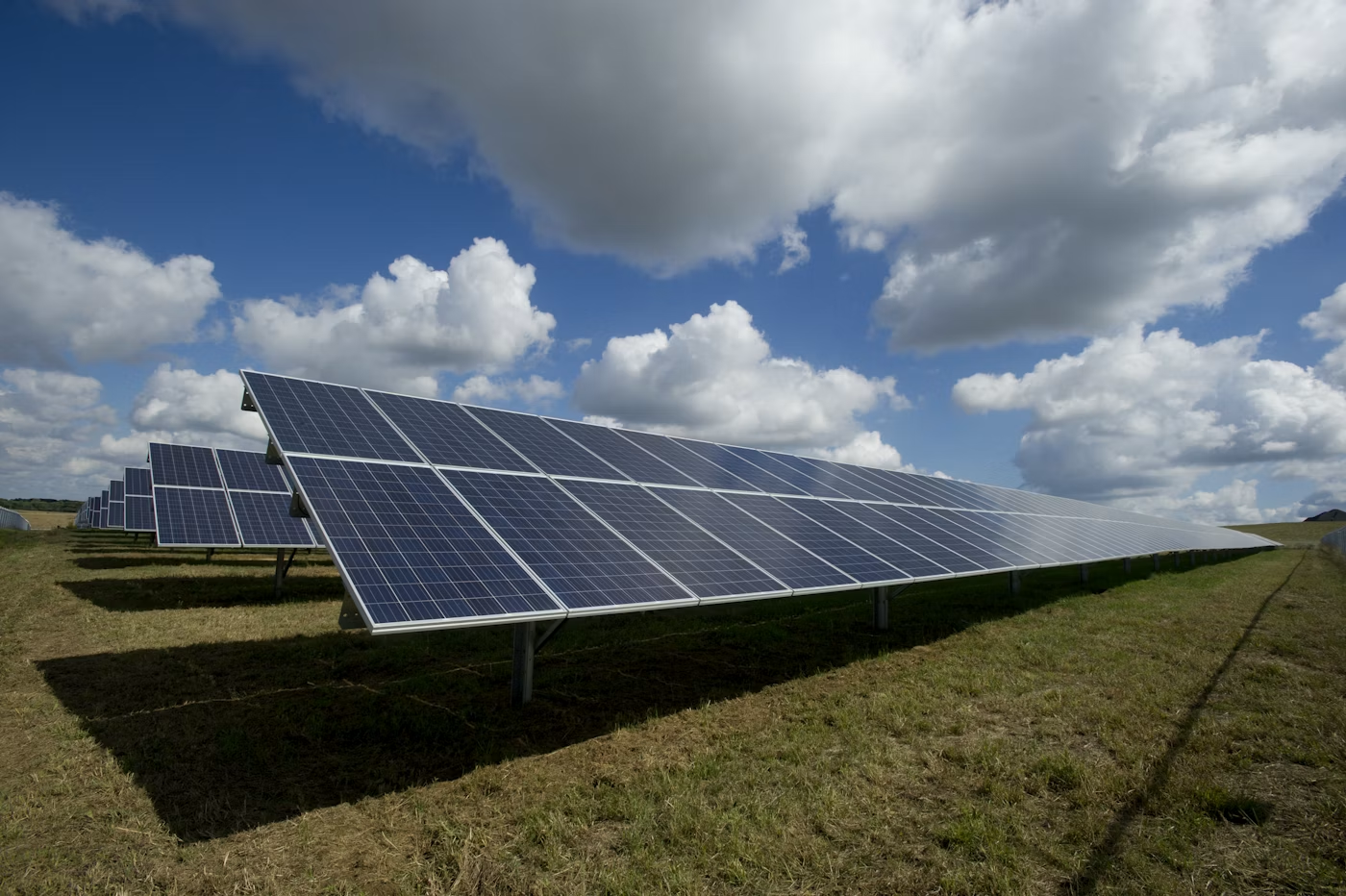
Solar modules capture sunlight and convert it into DC electricity for the system.
- Monocrystalline
- Polycrystalline
- Bifacial
- TOPCon

Off-Grid Solar Solutions
Generate, store and use your own solar electricity with a standalone off-grid solar system designed for homes and properties where grid power is unavailable or unreliable.
Off-Grid Solar System
An off-grid solar system, also called a standalone solar system, is designed for locations where electricity from the public grid is unavailable or extremely unreliable.
Because an off-grid system has no utility grid to fall back on, it must be designed for autonomy. Autonomy describes how long the property can continue operating on stored battery energy when solar generation is low.
On cloudy or rainy days, solar generation can fall significantly. A correctly designed system therefore produces and stores additional energy during stronger sunlight so the property can continue operating when solar output drops.
Get genuine advice from our solar experts. Share your electricity usage and requirements so we can help identify a suitable off-grid configuration.
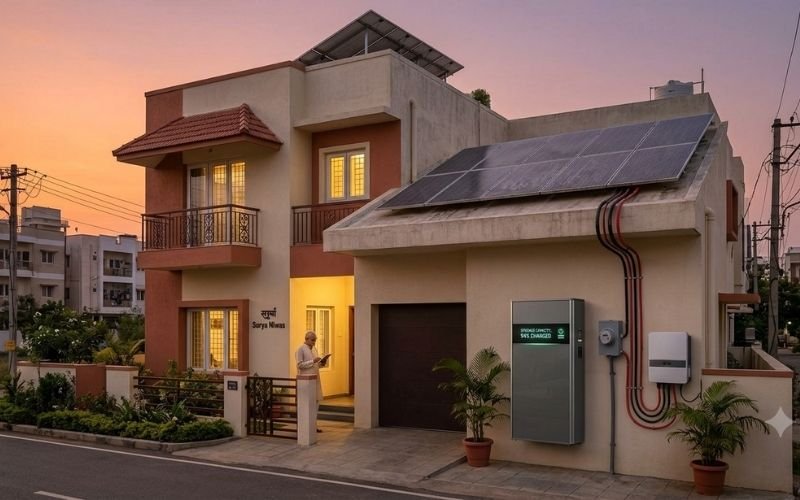
Designed for Autonomy
The defining feature of an off-grid solar system is autonomy. Since there is no grid connection, the battery bank becomes the energy reserve that keeps the property running after sunlight disappears.
A one-day autonomy system is designed to run the property for one full low-solar day from stored energy. Two days of autonomy means the stored energy is intended to cover two consecutive cloudy days.
System Components
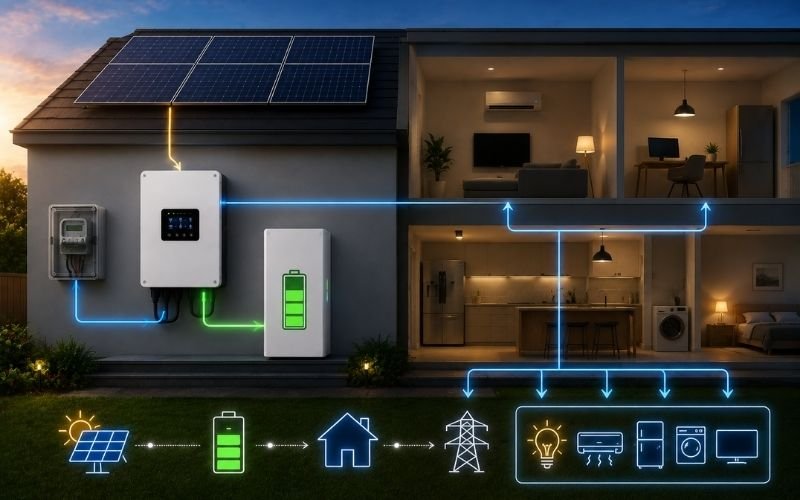
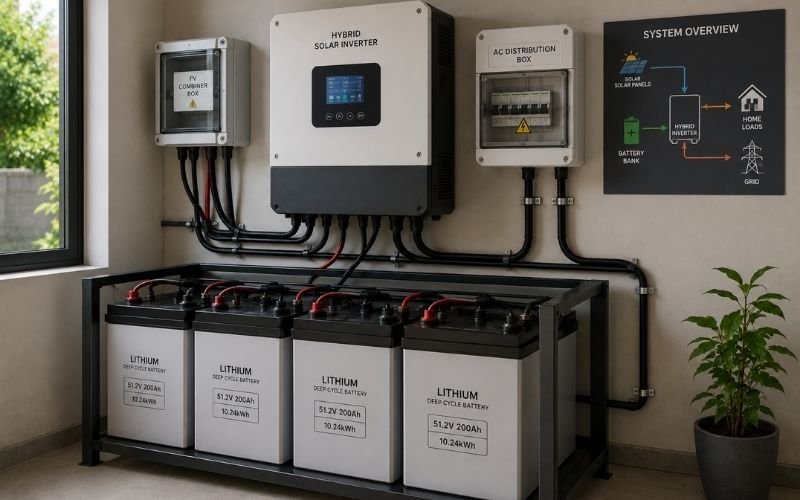
An off-grid installation combines solar generation, battery storage, power conversion, charging control, mounting and electrical protection into one coordinated system.
Solar modules capture sunlight and convert it into DC electricity for the system.
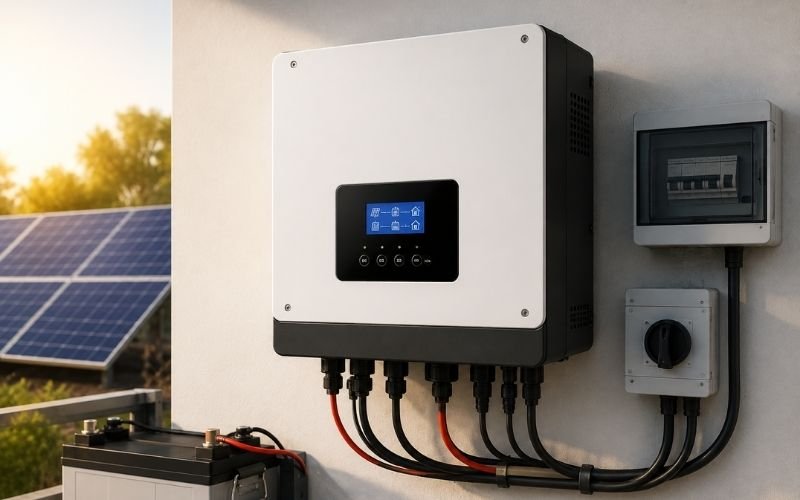
The inverter converts DC energy into AC electricity and coordinates energy flow between solar, battery and loads.
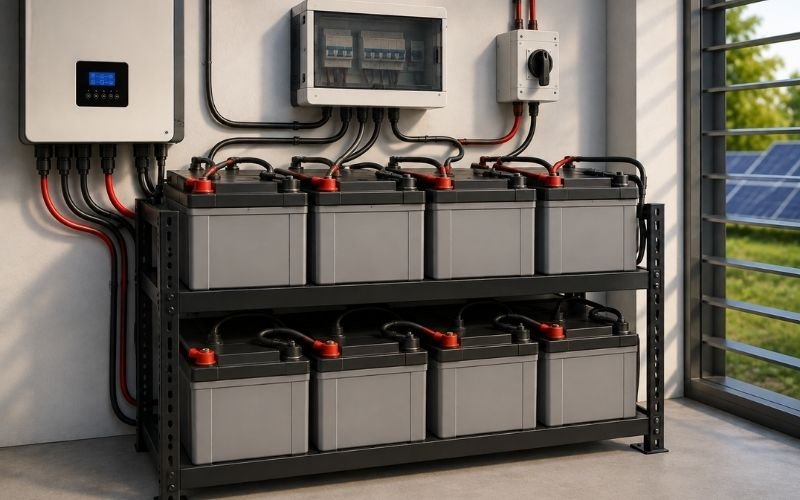
Batteries store surplus solar energy during the day so stored electricity can be used later.
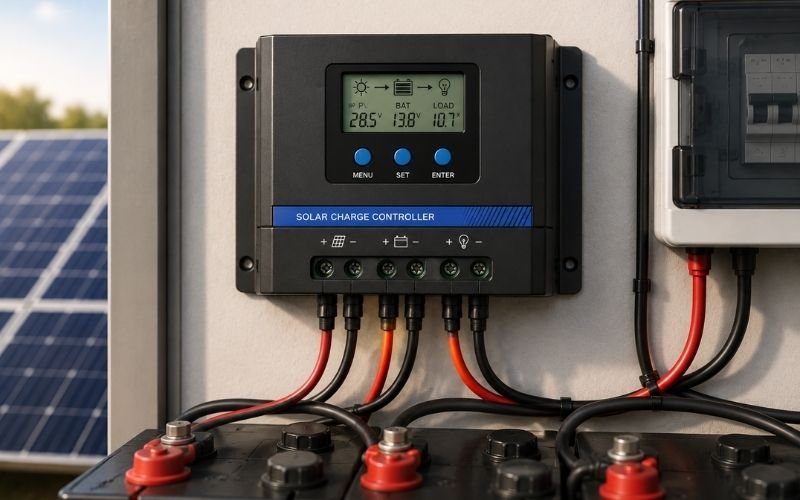
The charge controller regulates charging and helps manage the energy sent from the solar array to the battery.
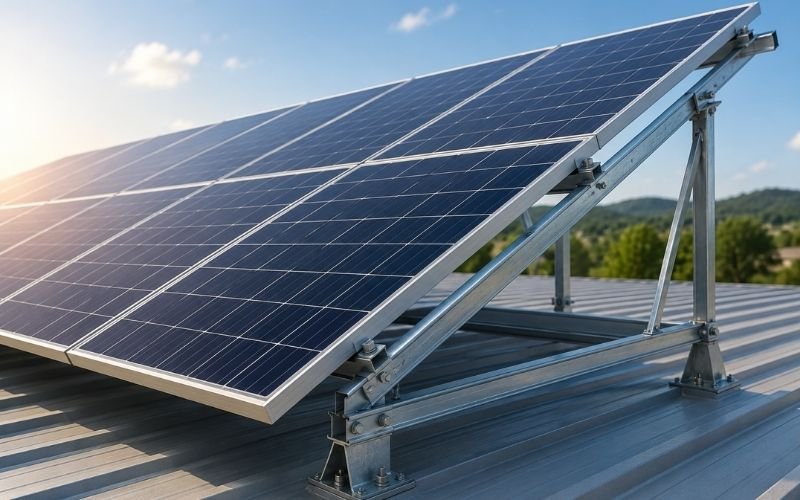
Proper mounting positions the panels at a suitable tilt while providing mechanical support.
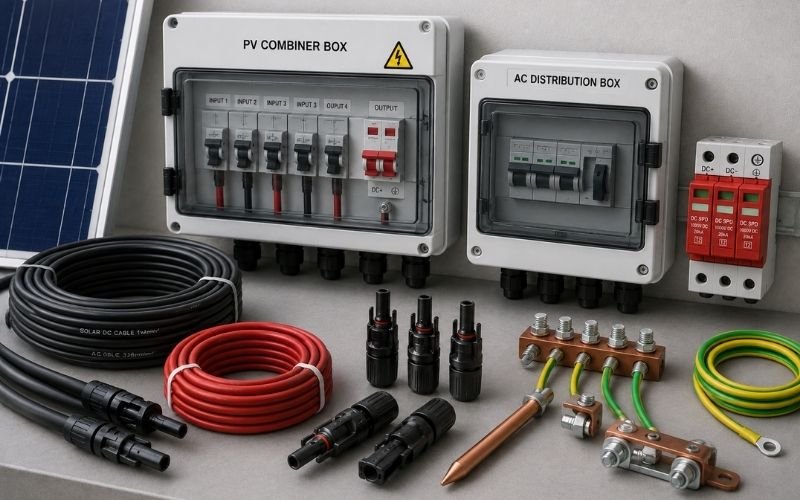
Electrical accessories help connect and protect the complete system.
Where It Makes Sense
Off-grid solar is most useful when a property cannot depend on reliable utility electricity and needs stored energy to maintain power availability.
Homes and properties in locations without access to a dependable utility grid can use solar and batteries as their primary electricity source.
Where grid supply exists but is extremely unreliable, battery-backed solar can provide a more independent energy solution.
Properties that want to operate independently from the utility grid can be designed around solar generation, batteries and controlled loads.
Certain commercial or industrial locations can benefit from standalone solar where extending or relying on grid infrastructure is impractical.
If your area has a reliable grid connection, an on-grid system is generally the more economical option. The right choice depends on your power reliability, consumption, roof/site conditions and backup requirements.
Battery Sizing
Battery sizing is one of the most important parts of an off-grid design because there is no utility grid to fall back on when solar generation is insufficient.
The supplied reference identifies four major design inputs: autonomy, depth of discharge, round-trip efficiency and the split between daytime and night-time energy consumption.
Solar CalculatorCost Guide
Off-grid systems generally cost more than standard on-grid systems because they require battery storage and additional equipment to provide energy independence.
| System Size | Battery | Indicative Price With GST* |
|---|---|---|
| 3 kW | 5.12 kWh lithium battery | ~₹4.12 lakh |
| 5 kW | 5.12 kWh lithium battery | ~₹5.50 lakh |
| 6 kW | 5.12 kWh lithium battery | ~₹7.34 lakh |
| 6 kW | 10.24 kWh lithium battery | ~₹8.30 lakh |
| 8 kW | 10.24 kWh lithium battery | ~₹9.65 lakh |
| 10 kW | 10.24 kWh lithium battery | ~₹11.15 lakh |
*Indicative figures based on the supplied reference material and specifically described there for lithium-ion/LFP batteries. Final prices vary according to battery type, panels, brand, inverter and installation requirements.
Government Subsidy
According to the supplied reference, the Indian government's PM Surya Ghar Muft Bijli Yojana central subsidy applies to eligible grid-connected rooftop solar systems, not standalone off-grid systems.
Therefore, if a homeowner's primary objective is to qualify for the central rooftop solar subsidy, a qualifying grid-connected system should be considered instead.
Advantages
Off-grid solar is especially valuable when electricity availability is the main challenge and a property needs its own independent source of power.
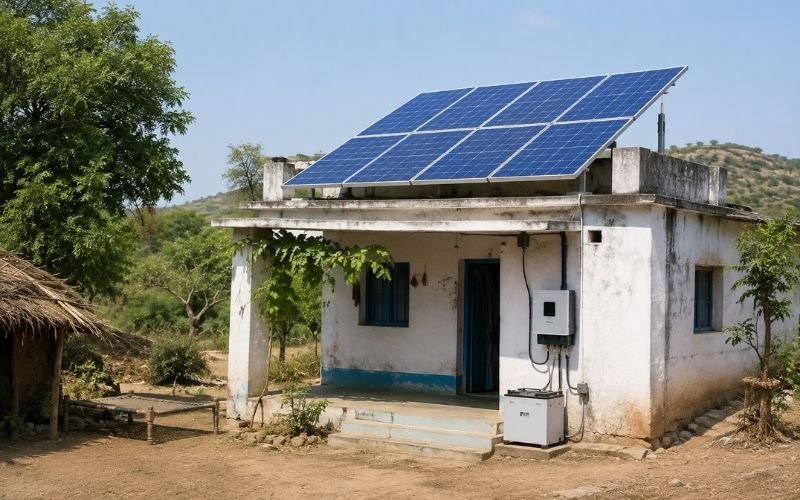
Provides a standalone electricity source for properties where utility-grid access is unavailable.
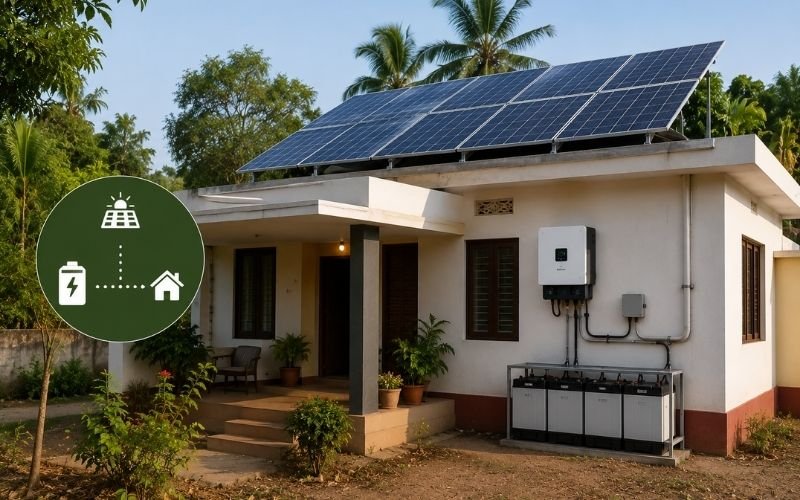
Solar generation and battery storage reduce dependence on an unreliable or unavailable grid connection.
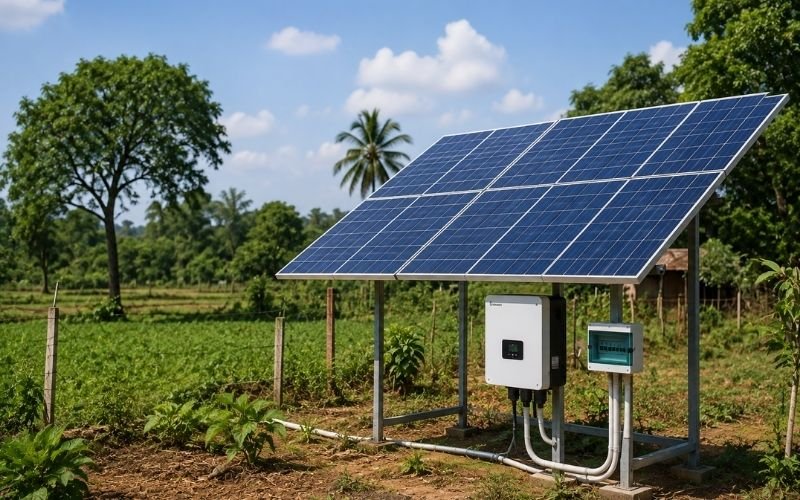
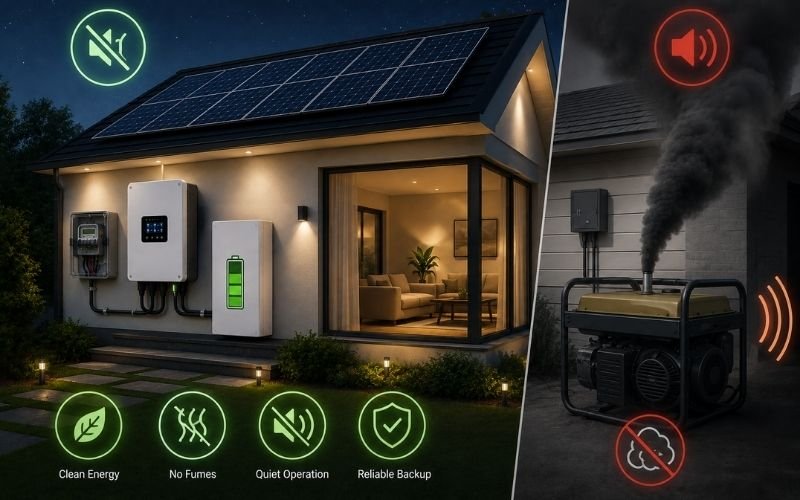
Solar generation produces electricity without direct combustion-related emissions during operation.
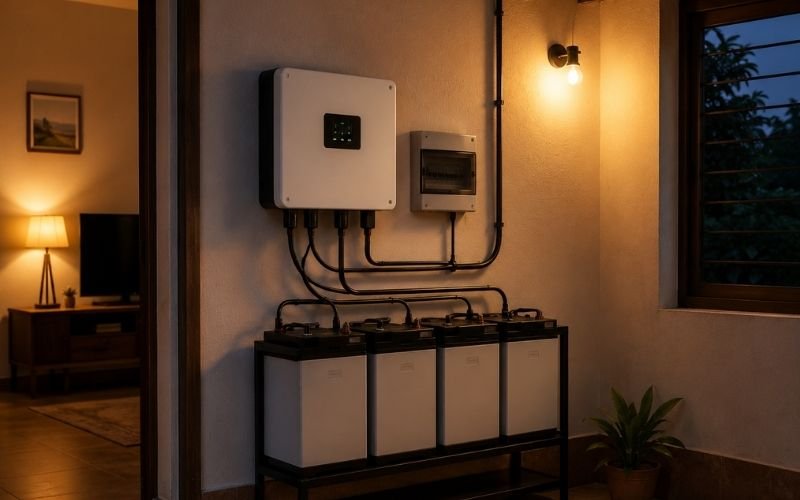
Stored energy can keep selected loads operating after sunlight disappears.
Things to Consider
Off-grid solar is not automatically the best solution for every property. Battery storage and system autonomy make the design more complex and generally more expensive than grid-connected solar.
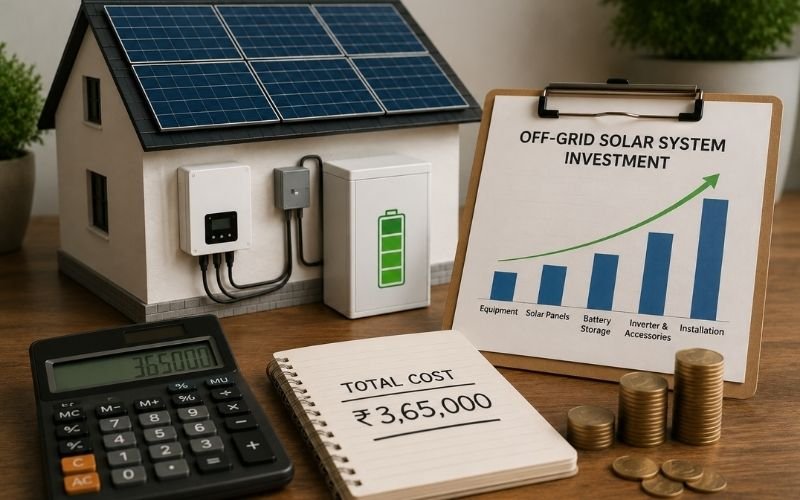
Battery storage is a major part of the system cost, making an off-grid installation more expensive than a typical on-grid system of similar solar capacity.
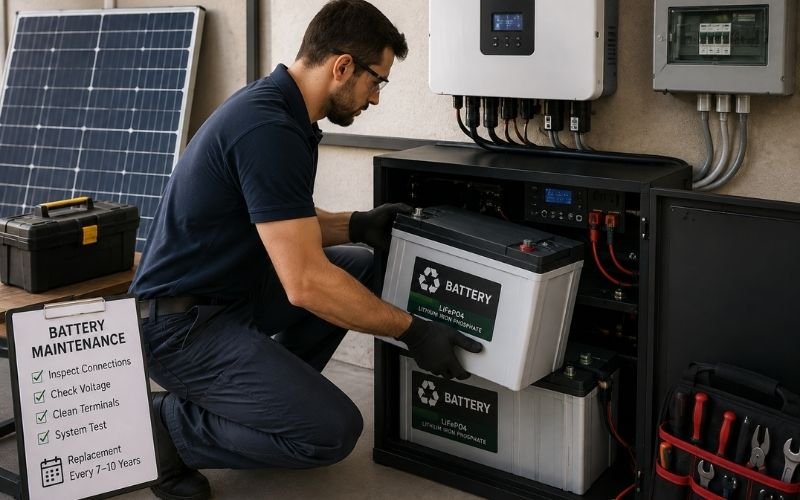
Batteries have a finite service life and eventually require replacement, which should be considered in the long-term ownership cost.
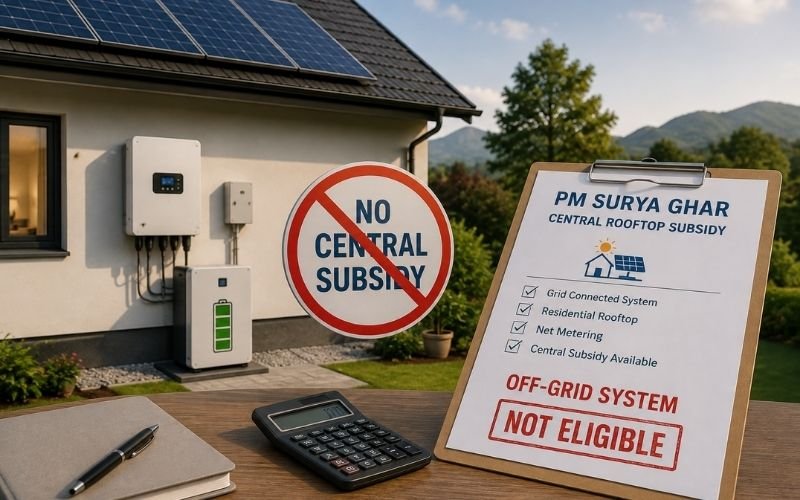
The supplied reference states that off-grid systems are not eligible for the PM Surya Ghar central rooftop subsidy.
Compare Solar Systems
The main difference between the three systems is how they interact with the utility grid and whether they use battery storage.
| Feature | On-Grid | Off-Grid | Hybrid |
|---|---|---|---|
| Connected to utility grid? | Yes | No | Yes |
| Battery storage? | Normally no | Yes | Yes |
| Backup during grid outage? | Normally no | Yes | Yes, for configured loads |
| Can export surplus? | Yes, subject to local rules | No utility-grid export | Where permitted by DISCOM/metering rules |
| Best suited for | Properties with reliable grid power that primarily want to reduce electricity bills. | Locations where grid power is unavailable or highly unreliable. | Properties that want solar savings plus battery backup while retaining grid connectivity. |
| Upfront cost | Lowest of the three in typical installations | Higher because of battery storage | Higher because of battery + hybrid hardware |
Off-Grid Solar Insights
Practical guides covering off-grid solar systems, batteries, energy independence, system sizing and smarter solar decisions.
Frequently Asked Questions
The supplied reference gives indicative 2026 prices ranging from approximately ₹4.12 lakh for a 3 kW system with a 5.12 kWh lithium battery to approximately ₹11.15 lakh for a 10 kW system with a 10.24 kWh lithium battery, including GST. Actual prices vary by system configuration.
According to the supplied reference, the PM Surya Ghar central subsidy is for eligible grid-connected rooftop solar systems and does not apply to standalone off-grid systems.
Battery quantity and capacity depend on the property's energy consumption, required autonomy, depth of discharge, battery chemistry, system voltage and round-trip efficiency. Battery sizing should be based on the actual load profile rather than a fixed number of batteries.
It can be possible when the solar array, inverter, battery bank and electrical protection are sized for the AC's starting and running load. A site-specific load assessment should be completed before confirming the configuration.
If the grid is reliable, on-grid solar is generally the more economical option. Off-grid solar is more suitable where grid power is unavailable or unreliable and battery-backed independence is required.
This depends on the designed autonomy and actual electricity consumption. A system designed for one day of autonomy is intended to cover a full day of low solar generation from stored battery energy.
Unlike a standard grid-connected system, an off-grid system cannot rely on the utility network when the sun is unavailable. Batteries therefore store surplus solar energy for night-time and low-solar periods.
Future grid connection depends on the inverter, electrical design, local requirements and equipment compatibility. If future flexibility is important, it should be discussed during the original system design.
Ready for Energy Independence?
Talk to Nexren about system sizing, battery capacity, autonomy, inverter selection and the right configuration for your property.